
Sadhu Board Benefits: What Happens to Your Nervous System in 3 Minutes
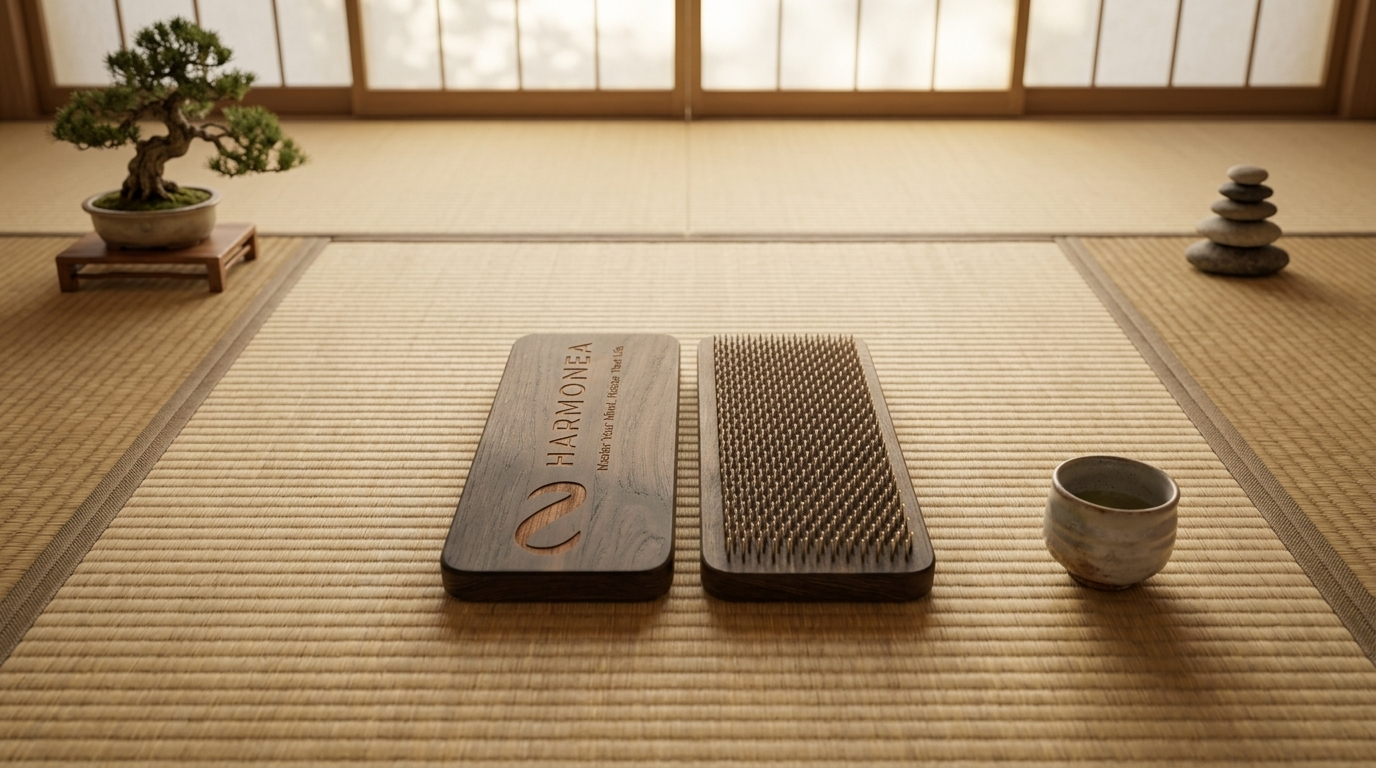
Standing still on a surface designed to produce discomfort should, by every conventional measure, increase stress. The heart rate should climb. The muscles should tighten. The body should move toward fight-or-flight. And for roughly the first minute, it does exactly that. What happens after that initial phase is what makes the Sadhu Board benefits worth examining through a scientific lens.
Controlled discomfort may produce measurable calm. That statement reads like a contradiction until you examine what the autonomic nervous system does under conditions of deliberate, bounded physical stress. Research on stress physiology suggests the nervous system responds to intentional pressure in ways comparable to structured breathwork, cold exposure, or sustained isometric holds by engaging the parasympathetic branch as a counterbalance. The Sadhu Board or Nail Board compresses this cycle into a short-duration session, typically a few minutes, which is why it has drawn interest from performance-oriented practitioners looking for time-efficient nervous system training.
To be clear about the evidence: no large-scale clinical trials have been conducted specifically on Sadhu Boards. What follows draws on established research in heart rate variability, cortisol physiology, acupressure, and stress inoculation training, and applies it to the sadhu board practice by inference. When we describe mechanisms, we draw on related research in related modalities. Where we describe sadhu board-specific outcomes, we are stating a hypothesis informed by that research, not a clinically proven conclusion.
What Is a Sadhu Board?
A Nail Board is a standing platform fitted with an array of precisely spaced, blunted points that apply concentrated pressure to the soles of the feet. The practice originates from the Indian contemplative tradition, where sadhus, ascetic practitioners, incorporated prolonged standing on pointed surfaces as a method of physiological and attentional training. The intent was never punishment. It was regulation: the deliberate use of the body's stress response to cultivate a state of composed alertness.
A notable modern demonstration of the practice is Ferdinand Morellec's 13-hour continuous session on a Sadhu Board, a Guinness World Records title set in April 2024 that drew public attention to the practice's endurance. While Morellec's feat is not a clinical study, it illustrates that sustained contact with a Sadhu Board involves more than mere pain tolerance and has contributed to growing interest in the physiological mechanisms that may underlie the experience. That interest sits at the intersection of acupressure science, stress physiology, and performance training.
The Neuroscience of Controlled Discomfort
The following mechanisms are drawn from established research in stress physiology, acupressure, and autonomic regulation. We note where evidence comes from studies on related modalities rather than sadhu boards directly.
Parasympathetic Activation
When concentrated pressure is applied to the plantar surface of the foot, mechanoreceptors send high-density afferent signals through neural pathways that may contribute to parasympathetic engagement. Research on acupuncture and acupressure has demonstrated that these modalities can modulate autonomic nervous system function. A 2025 meta-analysis of randomized controlled trials published in Frontiers in Neuroscience found that acupuncture protocols produced measurable shifts in autonomic balance (Li et al., 2025). Acupressure studies have documented similar parasympathetic responses when pressure is applied to specific points, including on the feet. The sadhu board, in effect, creates a whole-foot pressure field that is hypothesized to engage comparable reflexes, though this has not been directly tested in controlled trials.
Cortisol Regulation
Acute physical stress that is brief, voluntary, and predictable does not typically produce the prolonged cortisol elevation associated with chronic stress. Instead, research suggests it triggers a cortisol spike followed by a return to baseline, a pattern researchers describe as the cortisol recovery response. Studies on acute psychosocial stress have explored the relationship between controllable stress and cortisol dynamics (Engert et al., 2017), suggesting that bounded stress exposures may facilitate efficient cortisol clearance. A sadhu board session, typically lasting two to four minutes, falls within the short-duration window studied in this literature, though the specific cortisol response to sadhu board use has not been measured in published research.
Endorphin Release
Concentrated pressure on the foot's dense nerve endings is hypothesised to trigger the release of beta-endorphins, endogenous opioid peptides that modulate pain perception and promote a state of composed alertness. Acupressure research has documented endorphin-related responses across various pressure-based protocols, and the mechanism is well established in pain physiology more broadly. However, direct measurements of endorphin levels during sadhu board sessions have not been reported. The subjective reports of clarity and calm following sessions are consistent with beta-endorphin activity, but could also reflect placebo, expectancy, or novelty effects.
Heart Rate Variability Improvement
HRV, the variation in time between successive heartbeats, is one of the most reliable biomarkers of autonomic flexibility. Higher HRV correlates with better emotional regulation, faster recovery from stress, and superior cognitive performance under pressure. Kim and colleagues (2018) published a meta-analysis in Psychiatry Investigation showing that HRV is significantly affected by stress, with most studies reporting decreased parasympathetic activity during stress. The logical extension that repeated controlled stress-recovery cycles may train the autonomic nervous system to shift between sympathetic and parasympathetic states more efficiently is consistent with mechanisms observed in stress inoculation research. The sadhu board is hypothesised to deliver this cycle in a compressed, repeatable format, though longitudinal HRV studies on sadhu board practitioners have not yet been conducted.
Sadhu Board Benefits: What the Evidence Suggests
The potential sadhu board benefits cluster around several physiological responses. Each is grounded in established research on related modalities, acupressure, stress physiology, vagal stimulation, and is extended to the sadhu board by inference. We distinguish here between what is established in the broader literature and what remains a hypothesis specific to sadhu board practice.
Cortisol Regulation After Short-Duration Stress. Brief, controlled stress exposures are associated with a cortisol spike followed by efficient clearance. Some studies on related stressors suggest possible cortisol recovery effects following bounded discomfort (Engert et al., 2017). Whether sadhu board sessions produce the same pattern has not been directly measured, but the duration and intensity profile is consistent with protocols studied in the cortisol recovery literature.
Parasympathetic Engagement Acupressure and acupuncture research has demonstrated shifts in autonomic balance toward parasympathetic activity (Li et al., 2025). The sadhu board's whole-foot pressure application is hypothesized to engage similar pathways, though this specific mechanism has not been isolated in sadhu board studies.
Potential HRV Benefits With Repeated Use The pattern of repeated acute stress-recovery cycles is consistent with mechanisms observed in autonomic training research. If daily sadhu board use produces reliable stress-recovery cycling, it may contribute to improved resting HRV over time, though this has not been confirmed by longitudinal measurement (Kim et al., 2018).
Attentional Focus Under Discomfort Maintaining deliberate stillness during physical discomfort requires sustained recruitment of the prefrontal cortex, the same neural circuitry responsible for executive function and decision-making under pressure. Cognitive load research confirms that voluntary attention during mild pain states is associated with prefrontal engagement (Seminowicz & Davis, 2007). This mechanism is well-established and plausibly applies to the sadhu board experience.
Stress Inoculation Repeated voluntary exposure to bounded physical stress is hypothesized to recalibrate the brain's threat appraisal threshold. This mechanism is well-documented in the stress inoculation training literature, where it results in reduced amygdala reactivity to novel stressors (Meichenbaum, 2007). Whether the sadhu board produces a comparable inoculation effect is inferred from this framework rather than directly demonstrated.
Peripheral Circulation Concentrated plantar pressure may activate local vasodilation reflexes, potentially improving blood flow to the lower extremities. Reflexology research has documented changes in circulation following foot-pressure sessions of comparable intensity (Chandrababu et al., 2019), though direct measurements during sadhu board use have not been published.
Vagal Tone The vagus nerve, which mediates the parasympathetic response, exhibits increased baseline activity following repeated stimulation through various modalities. Breit and colleagues (2018) reviewed the role of the vagus nerve as a modulator of multiple physiological systems, thereby establishing the importance of vagal tone for emotional recovery and cardiovascular regulation. Whether sadhu board practice specifically strengthens vagal tone is a reasonable hypothesis, but one that remains to be tested.
What connects these potential sadhu board benefits is a single principle: the nervous system adapts to what it is repeatedly asked to do. Standing on a sadhu board asks the nervous system to find composure inside discomfort. Done consistently, that request may become a capacity. For a deeper look at how repeated neural demands reshape the brain's architecture, our article on neuroplasticity and cognitive performance provides the underlying framework.
What a Short Session May Look Like, Physiologically
The following is an approximate account of what the autonomic nervous system likely does during a short sadhu board session, based on what is known about sympathetic-parasympathetic dynamics during controlled acute stress. The timing and magnitude of these responses vary significantly between individuals, and the sequence described here is inferred from stress physiology research rather than sadhu board-specific measurement.
Early Phase: Sympathetic Activation
Contact with the board activates the sympathetic nervous system. Heart rate typically increases. Cortisol begins to rise. The amygdala flags the stimulus as a potential threat. Muscular tension increases, particularly in the calves, lower back, and jaw. Breathing may become shallow and rapid. This is the body's default stress architecture performing as designed.
At this stage, the nervous system has not yet determined whether the stimulus is dangerous or manageable. The decisive variable is whether the individual remains still and continues to breathe deliberately. That voluntary choice, to stay, is the signal the prefrontal cortex sends to override the amygdala's initial alarm.
Middle Phase: Potential Parasympathetic Counterbalance
As the brainstem processes the stressor as static and non-escalating, the parasympathetic branch is hypothesised to begin engaging. Based on research on autonomic regulation, this may involve an increase in vagal tone, a gradual deceleration of heart rate, and a deeper breath. The high-frequency component of HRV, the parasympathetic marker, may begin to rise.
This is the phase where the sadhu board experience is hypothesised to depart from passive stress. The body is not simply enduring. It may be actively reorganising its autonomic hierarchy, shifting from sympathetic dominance toward a more balanced state. The prefrontal cortex remains engaged, maintaining attentional focus while recovery systems activate. The timing of this transition likely varies considerably between individuals and sessions.
Later Phase: Possible Stabilisation
In the final portion of a short session, HRV may stabilise into a more coherent pattern. Cortisol production is expected to slow. Beta-endorphins may reach a sufficient concentration to modulate pain perception without producing sedation. The subjective experience often described by practitioners is not numbness but clarity, a composed alertness that some report persisting well after stepping off the board.
If this phase is reached, the nervous system has completed an approximate stress-recovery cycle within minutes. The autonomic flexibility required for that transition is consistent with the kind of flexibility that supports performance under pressure, whether in financial decision-making, clinical settings, or high-stakes leadership. The board does not teach calm. It is hypothesised to train the speed of return to calm.
This compressed cycle is why the Harmony Board, Harmonea's refined version of the traditional sadhu board, was designed for daily use. The protocol is short enough to fit before a morning session or between meetings. The physiological return, based on practitioner reports and the mechanisms described above, appears to be both immediate and cumulative with consistent practice.
Who Uses the Sadhu Board, and Why
The sadhu board has been adopted by some practitioners in high-stress fields who are drawn to its time-efficiency and physiological directness. The following profiles reflect reported use cases rather than clinical endorsements.
Financial Professionals
The relationship between HRV and decision-making quality under pressure is well-documented in behavioural research. Some professionals who manage risk under time constraints have reported using sadhu board sessions as a pre-work recalibration practice, a brief reset intended to support autonomic flexibility before high-stakes environments. The appeal is functional: faster recovery from sympathetic activation may contribute to fewer reactive decisions during volatile conditions.
Performance Coaches and Consultants
Some coaches who work with executive clients have incorporated sadhu board protocols into their practice, particularly for clients seeking to sustain composure during high-pressure interactions. The board provides a concrete, repeatable practice that clients can execute independently. Unlike talk-based interventions, the feedback loop is physiological and immediate.
Founders and Operators
The founder context, sustained cognitive load, fragmented attention, and chronic low-grade stress may benefit from interventions that compress the stress-recovery cycle. A short sadhu board session between meetings provides a physical reset without requiring a schedule change, a meditation cushion, or a long time block. Some practitioners in startup and venture contexts have reported integrating the practice into their daily routines.
Wellness and Performance Professionals
Physiotherapists, athletic trainers, and biohacking practitioners have adopted the sadhu board as both a personal practice and a client-facing tool. The appeal for this audience is the density of physiological mechanisms that may be activated in a single brief session: acupressure-like stimulation, stress inoculation, potential HRV training, and attentional control, all delivered through a single protocol that requires no technology, no consumables, and no supervision after initial guidance.
Tactical and First-Responder Communities
Stress inoculation is a formal component of tactical training programs. Some practitioners in military and first-responder contexts have explored the sadhu board as an accessible, daily-repeatable form of controlled stress exposure. The conceptual mechanism is consistent with operational readiness training: voluntary exposure to bounded discomfort is hypothesised to recalibrate the threat appraisal system over time.
Research Limitations and What We Do Not Yet Know
A Note on the Evidence
Intellectual honesty requires stating clearly what the current evidence does and does not support. The sadhu board is a traditional practice with a growing community of modern practitioners. The scientific framing in this article is grounded in established research on related modalities, not on a direct clinical study of sadhu boards. Specifically:
No large-scale clinical trials have been conducted on sadhu boards. There are no published randomised controlled trials measuring HRV, cortisol, endorphin, or autonomic outcomes during or after sadhu board sessions.
Most evidence is extrapolated from acupressure research, reflexology studies, stress physiology, and stress inoculation training literature. These are related modalities, but they are not identical to the sadhu board experience.
Placebo, expectancy, and novelty effects may contribute to the subjective benefits reported by practitioners. When a practice is novel and framed positively, the mind's contribution to the experience is not trivial.
Individual variability is significant. The timing, magnitude, and character of the autonomic response to a sadhu board likely differ substantially between individuals based on pain sensitivity, prior stress exposure, autonomic baseline, and psychological framing of the experience.
None of this invalidates the practice. It means the practice is ahead of the research, which is common for traditional modalities that are only now attracting scientific attention. We present this framework because its underlying mechanisms are plausible, well studied in adjacent domains, and consistent with practitioner reports. We will update this article as direct research becomes available.
The Oldest Performance Tools Survive for a Reason
The sadhu board has persisted for thousands of years across multiple contemplative and physical training traditions. That persistence is not an accident of culture. It is consistent with physiology. The mechanisms the board is hypothesised to engage, parasympathetic activation, cortisol regulation, vagal toning, and stress inoculation, are not modern discoveries. They are modern names for processes the human nervous system has always performed in response to controlled, voluntary discomfort.
What neuroscience has contributed is not validation. It is vocabulary and measurement tools. We now have frameworks for understanding which mechanisms may fire, in what general sequence, and at what approximate duration. Research suggests that short-duration exposure is likely sufficient to initiate a stress-recovery cycle. And the populations most interested in the practice are those who operate under sustained cognitive and emotional pressure, people for whom the speed of nervous system recovery is not a wellness metric but a performance variable.
The practice does not require technology to work. But it does benefit from considered design. The spacing, the material, and the geometry of the points influence whether the experience produces a productive stress-recovery cycle or simply an aversive one. That distinction is what separates a traditional practice from a refined protocol.
Conclusion
The sadhu board benefits explored throughout this article converge on a plausible, science-informed outcome: a nervous system that may recover faster, regulate more efficiently, and maintain composure under conditions that would otherwise trigger reactive decision-making. A few minutes of deliberate, bounded discomfort appears sufficient to initiate an autonomic stress-recovery cycle, and when repeated consistently, that cycle is hypothesized to compound into meaningful gains in HRV, cortisol regulation, vagal tone, and attentional control. The evidence base for these claims is drawn from established research on related modalities rather than from direct clinical trials on sadhu boards, and individual responses will vary. For professionals who operate under sustained pressure, the practice is worth exploring as a brief, repeatable, physiologically grounded protocol, one that is consistent with what the science of stress and recovery tells us about how the nervous system adapts.
Harmonea Research content is provided for informational and educational purposes only and does not constitute medical advice, diagnosis, or treatment. Always seek the advice of a physician or other qualified health provider with any questions regarding a medical condition. Performance training protocols should be adapted to your individual physical and psychological baseline. The scientific claims in this article are based on research in related modalities and should not be interpreted as clinically proven outcomes of sadhu board use specifically. By engaging with these practices, you acknowledge that you are responsible for your own safety and well-being.
References
Breit, S., Kupferberg, A., Rogler, G., & Hasler, G. (2018). Vagus nerve as modulator of the brain-gut axis in psychiatric and inflammatory disorders. Frontiers in Psychiatry, 9, 44. https://doi.org/10.3389/fpsyt.2018.00044
Chandrababu, R., Rathinasamy, E. L., Suresh, C., & Ramesh, J. (2019). Effectiveness of reflexology on circulation among patients with type 2 diabetes mellitus. Holistic Nursing Practice, 33(3), 149-156. https://doi.org/10.1097/HNP.0000000000000324
Engert, V., Kok, B. E., Puhlmann, L. M. C., Lumma, A. L., Bornemann, B., Pez, A., & Singer, T. (2017). Specific reduction in cortisol stress reactivity after social but not attention-based mental training. Science Advances, 3(10), e1700495. https://doi.org/10.1126/sciadv.1700495
Kim, H. G., Cheon, E. J., Bai, D. S., Lee, Y. H., & Koo, B. H. (2018). Stress and heart rate variability: A meta-analysis and review of the literature. Psychiatry Investigation, 15(3), 235-245. https://doi.org/10.30773/pi.2017.08.17
Li, Y., et al. (2025). Clinical efficacy and safety of acupuncture in modulating autonomic nervous function: A meta-analysis of randomized controlled trials. Frontiers in Neuroscience, 19, 1694110. https://doi.org/10.3389/fnins.2025.1694110
Meichenbaum, D. (2007). Stress inoculation training: A preventative and treatment approach. In P. M. Lehrer, R. L. Woolfolk, & W. S. Sims (Eds.), Principles and practice of stress management (3rd ed., pp. 497-518). Guilford Press.
Seminowicz, D. A., & Davis, K. D. (2007). Pain enhances functional connectivity of a brain network evoked by performance of a cognitive task. Journal of Neurophysiology, 97(5), 3651-3659. https://doi.org/10.1152/jn.01210.2006
Ready to Master Your Mental Edge?
Take our free assessment and discover your mental performance profile.