
HRV Training: The Complete Evidence-Based Guide for Mental Performance
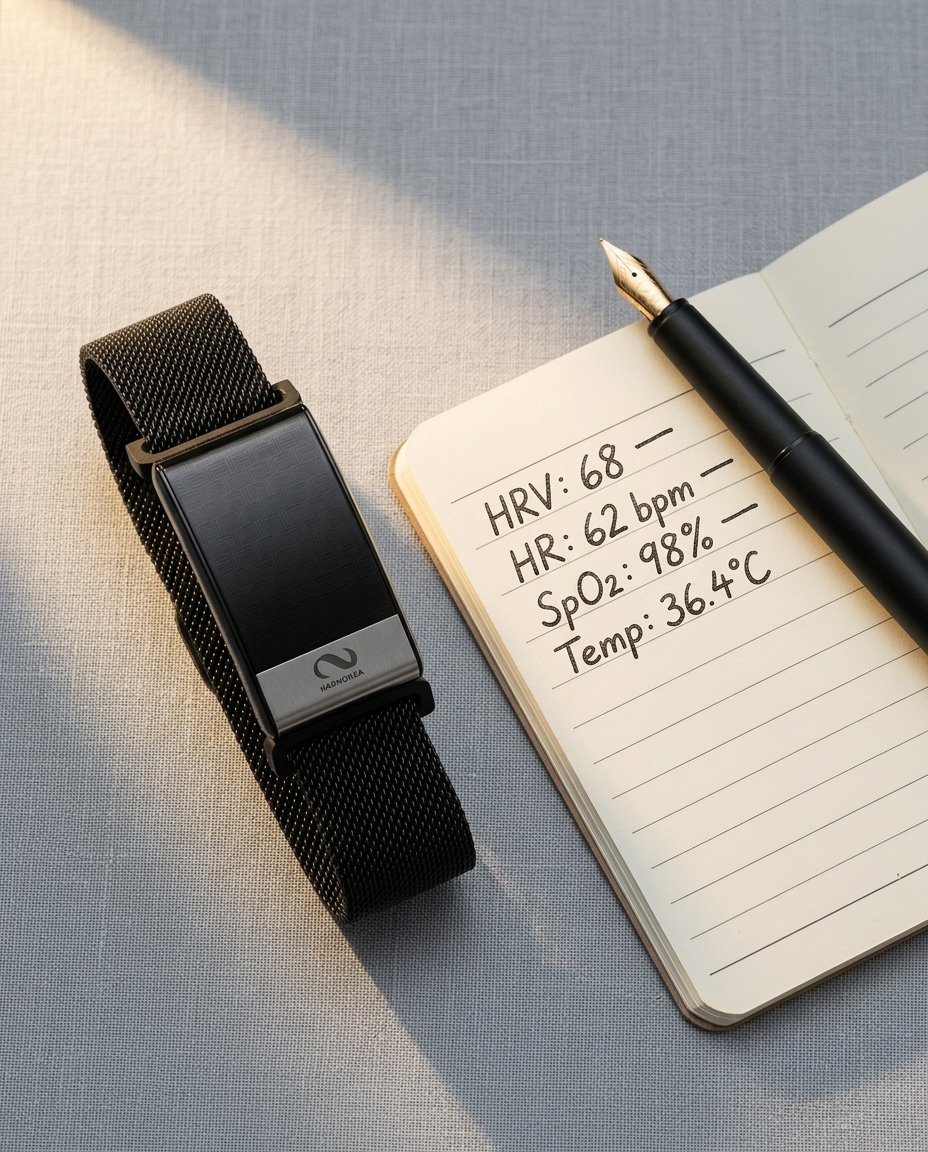
Thirty seconds before a trader places a position, the nervous system has already voted. Before a founder enters a board meeting, before a surgeon makes the first cut, before a coach delivers difficult feedback, the body has cast its prediction about what comes next. That prediction is measurable. It lives in the variation between heartbeats, and it is called heart rate variability.
This guide covers what HRV is, why it predicts performance, what destroys it, and, most importantly, seven evidence-based methods for training it. Every claim is cited. Every protocol is practical.
What Is Heart Rate Variability?
Heart rate variability is the variation in time between consecutive heartbeats. A resting heart rate of 60 beats per minute does not mean the heart beats once every second with mechanical precision. In a healthy nervous system, the intervals fluctuate: 0.85 seconds, then 1.12 seconds, then 0.93 seconds. This variability is not noise. It is a signal.
HRV is governed by the autonomic nervous system, specifically the interplay between its two branches. The sympathetic branch accelerates heart rate in response to demand. The parasympathetic branch, acting through the vagus nerve, slows it down during recovery. Higher HRV indicates that both branches are responsive and well-balanced, giving the body the flexibility to adapt rapidly to changing demands (Shaffer & Ginsberg, 2017).
The distinction that matters for professionals is this: HRV is both a measurement and a trainable variable. Most people encounter it as a number on a wearable, a score that tells them something about recovery or readiness. That is useful but incomplete. HRV can be deliberately trained, just as cardiovascular fitness or attention can be. The number moves because the underlying physiology moves.
The key metrics are RMSSD (root mean square of successive differences), which captures short-term vagally mediated variability, and SDNN (standard deviation of NN intervals), which reflects overall autonomic function across longer periods. Both are well validated and respond to training (Laborde et al., 2017).
Why HRV Predicts Performance Under Pressure
The question worth answering immediately is: why should a professional who makes decisions under pressure care about the spacing between heartbeats?
The answer lies in the prefrontal cortex. Thayer and Lane's neurovisceral integration model (2000, updated 2009) established that HRV is directly linked to prefrontal cortical function, the neural substrate of working memory, cognitive flexibility, and inhibitory control. When HRV is high, the prefrontal cortex exerts effective top-down regulation over subcortical threat circuits. When HRV is low, the amygdala runs the decision. The research supporting this model has been replicated extensively.
Laborde et al. (2018) demonstrated that higher resting HRV predicted better executive function across multiple cognitive tasks, even after controlling for age, fitness, and baseline mood. Participants with higher vagally mediated HRV showed faster, more accurate responses on tasks requiring cognitive flexibility, the capacity that distinguishes effective decision-making under uncertainty.
A meta-analysis by Forte et al. (2019) examined 26 studies and confirmed a consistent positive association between resting HRV and executive function, particularly attention, working memory, and response inhibition. The effect sizes were stable across age groups, suggesting a fundamental relationship rather than a confound of fitness or youth.
Polyvagal Theory (Porges, 2011) provides additional explanatory depth. The ventral vagal complex, the most evolutionarily recent autonomic branch, enables the calm, focused engagement required for nuanced cognitive tasks. High HRV reflects robust ventral vagal tone. Low HRV reflects a nervous system defaulting to older, more defensive circuits optimized for survival, not for the precision thinking that professional performance demands.
Hansen et al. (2003) studied military personnel and found that those with higher resting HRV performed significantly better on cognitive tasks under stress, including working memory and threat-detection scenarios. The high-HRV group maintained near-baseline cognitive function under stress while the low-HRV group showed measurable degradation.
The practical implication is direct: HRV is not a wellness metric. It is a readiness metric. It tells professionals how much cognitive capacity their nervous system currently has available, and, critically, how much it will retain when conditions become difficult.
What Affects HRV, and What Destroys It
Understanding what degrades HRV is as important as knowing how to build it. Several common factors suppress vagal tone, and many professionals unknowingly sustain all of them simultaneously.
Sleep Deprivation
Even partial sleep restriction significantly reduces HRV. Tobaldini et al. (2013) found that a single night of restricted sleep (4 hours) produced a measurable shift toward sympathetic dominance and a reduction in vagally mediated HRV. Chronic sleep debt compounds this effect. For professionals who routinely sleep six hours or fewer, baseline HRV is well below what their physiology can support. The prefrontal cortex, already the first region to suffer from sleep pressure, loses its autonomic backing.
Alcohol
Moderate alcohol consumption suppresses HRV for 12 to 24 hours after intake. Ralevski et al. (2019) showed that even moderate doses reduced RMSSD significantly during sleep, precisely the window when the parasympathetic nervous system should be doing its most important recovery work. The implication is straightforward: the after-dinner drink that supposedly aids relaxation actively undermines the autonomic recovery it claims to provide.
Chronic Psychological Stress
Prolonged stress exposure does not just lower HRV temporarily. It reshapes autonomic baseline. Jarczok et al. (2013) conducted a large-scale study of employees and found that work-related chronic stress was independently associated with reduced HRV, even after controlling for physical activity, BMI, and smoking. The nervous system adapts to sustained threat by keeping sympathetic tone elevated. This adaptation is protective in the short term and corrosive over months.
Overtraining
Physical training typically raises HRV. Overtraining reverses this relationship. Bellenger et al. (2016) reviewed the literature on functional overreaching and nonfunctional overreaching in athletes and found that HRV suppression is among the earliest markers of overtraining syndrome, often appearing before subjective symptoms. For high-performing professionals who combine demanding cognitive work with aggressive exercise regimens, this signal matters. More physical stress is not always better when the nervous system is already loaded.
HRV Training, Seven Evidence-Based Methods
The following methods are supported by peer-reviewed research. Each one targets the autonomic nervous system through a different mechanism. The strongest protocols combine several of them.
1. Coherent Breathing (5-6 Breaths Per Minute)
Breathing at approximately 5.5 breaths per minute, roughly five seconds in, five seconds out, produces respiratory sinus arrhythmia resonance. At this frequency, heart rate oscillations synchronise with respiratory cycles, producing maximal HRV amplitude. This is not a relaxation technique. It is a physiological optimisation.
Lehrer and Gevirtz (2014) reviewed resonance frequency breathing and HRV biofeedback, demonstrating that regular practice at this rate increases baroreflex gain, the body's primary mechanism for short-term autonomic regulation. Improvements in resting HRV were observed after as few as four weeks of daily practice.
The application is simple: ten minutes of coherent breathing daily, ideally in the morning. A breath pacer set to 5.5 breaths per minute is sufficient. Pairing the practice with real-time HRV tracking accelerates skill acquisition by providing immediate physiological feedback.
2. Cold Exposure
Brief, deliberate cold exposure activates the vagus nerve through a well-documented reflex pathway. Cold water applied to the face or neck triggers the mammalian dive reflex, producing an immediate parasympathetic surge and acute HRV increase (Mäkinen et al., 2008).
Repeated cold exposure over weeks trains the autonomic nervous system to recover more efficiently from sympathetic activation. Muzik et al. (2018) found evidence of increased brown adipose tissue activation alongside improved autonomic regulation in cold exposure practitioners. The nervous system learns to manage the stress stimulus more effectively, and that learning transfers to other forms of acute stress.
The protocol does not require extremes. Thirty to ninety seconds of cold water at the end of a shower, or cold face immersion for 15 to 30 seconds, is sufficient for autonomic stimulus. The key variable is consistency, not intensity.
3. Physical Stress Inoculation
Standing on a surface that produces controlled physical discomfort, such as a sadhu board with calibrated pressure points, creates a laboratory for autonomic regulation. The practice requires maintaining parasympathetic engagement while the body receives a genuine stress signal. This is not endurance training. It is nervous system training.
The mechanism draws on stress inoculation theory (Meichenbaum, 1985) and its physiological extensions. Deliberate, repeated exposure to manageable stressors builds stress tolerance by improving the efficiency of autonomic recovery. The benefits of this type of physical stress practice include faster return to parasympathetic baseline after acute stress, a measurable and transferable adaptation.
Sessions of two to five minutes, combined with controlled breathing, provide a practical daily protocol. The discomfort is the point: it gives the nervous system something real to regulate against, which is precisely how autonomic capacity grows.
4. Meditation and Mindfulness
Meditation's effect on HRV is well-established but often described imprecisely. Not all meditation practices affect HRV equally. Practices that involve focused attention and non-reactive awareness of internal states show the strongest vagal effects.
Krygier et al. (2013) measured HRV before and after a ten-day Vipassana meditation retreat and found significant increases in resting HRV, with the largest gains in participants who had the lowest baseline HRV. This suggests that meditation may be most beneficial for those whose autonomic systems are most suppressed, precisely the population that tends to seek it out.
Pascoe et al. (2017) confirmed in a systematic review that mindfulness-based interventions produce consistent improvements in physiological stress markers, including HRV, cortisol, and blood pressure. Daily practice of 15 to 20 minutes appears sufficient, with benefits accumulating over weeks.
5. Sleep Architecture Optimisation
Sleep is the single most powerful modulator of HRV. During deep slow-wave sleep, the parasympathetic nervous system is maximally active, and vagal tone reaches its highest levels of the 24-hour cycle. Disrupting this architecture, through late screens, irregular timing, caffeine half-life overlap, or environmental noise, directly degrades the nightly HRV restoration process.
Cellini et al. (2016) demonstrated that both sleep duration and sleep quality independently predicted next-day HRV, with quality (specifically deep sleep proportion) being the stronger predictor. Professionals who sleep seven hours of fragmented, shallow sleep may have lower morning HRV than those who sleep six hours of well-structured, deep-sleep-rich rest.
The practical priorities: consistent sleep and wake times (within a 30-minute window), cool sleeping environment (18-19 degrees Celsius), no caffeine after early afternoon, and minimising artificial light before bed. For HRV training purposes, these are foundational infrastructure.
6. HRV Biofeedback Training
HRV biofeedback is the most directly targeted training method available. A sensor measures heart rate variability in real time, and the individual learns to increase HRV through breathing and attention, guided by immediate visual or auditory feedback.
Lehrer et al. (2020) reviewed two decades of HRV biofeedback research and concluded that regular training produces lasting increases in baroreflex sensitivity, resting HRV, and autonomic flexibility. The review covered anxiety, PTSD, athletic performance, and cognitive function, with positive findings across all domains. Typical protocols involve 10 to 20 sessions of 20 to 30 minutes each, with benefits persisting after training ends.
Where biofeedback once required clinical equipment, wearable devices now offer real-time HRV data with sufficient accuracy for self-directed training. The key is pairing data with deliberate practice rather than passively watching numbers. The same principles of neuroplasticity that govern skill learning apply: active engagement with feedback drives adaptation.
Real-time HRV data during training sessions accelerates adaptation. The Harmony Band and Harmony Ring provide continuous HRV measurement, turning each practice session into a biofeedback loop.
7. Vagal Nerve Stimulation Through Breathwork
Beyond coherent breathing, specific breathwork techniques target the vagus nerve through mechanical and pressure-based mechanisms. Extended exhalation breathing, where the exhale is roughly twice the length of the inhale, directly stimulates vagal afferents and shifts autonomic balance toward parasympathetic dominance.
Gerritsen and Band (2018) reviewed the mechanisms by which contemplative practices affect the autonomic nervous system and concluded that slow, deep breathing with extended exhalation is the single most efficient method for acute vagal activation. The review identified multiple converging pathways: direct mechanical stimulation of vagal afferents in the lungs, baroreflex activation through blood pressure oscillations, and top-down cortical regulation of brainstem autonomic nuclei.
Practical protocols include box breathing with an extended exhale (inhale 4 seconds, hold 4 seconds, exhale 6 to 8 seconds, hold 2 seconds) and structured breathwork sessions of 10 to 15 minutes. The extended exhale is the active ingredient, measurable within seconds, trainable over weeks. For professionals who need a rapid state shift before high-stakes moments, this is the fastest autonomic return available without external tools.
How to Measure HRV, What to Look For
Training without measurement is guessing. The value of tracking HRV lies not in the daily number itself but in the trend over weeks and the relationship between training inputs and autonomic outputs.
What Metrics Matter
For most professionals, two metrics provide sufficient signal. RMSSD captures beat-to-beat vagal modulation and is the most responsive to changes in daily training and recovery. It is the primary metric used in most wearable devices. SDNN reflects broader autonomic function over longer recording periods (typically 24 hours) and is better suited for tracking training adaptation over weeks and months.
Frequency-domain metrics, HF power and LF power, offer additional granularity for those using clinical-grade equipment. The LF/HF ratio, once used as a proxy for sympathovagal balance, has been challenged in recent literature and should be interpreted cautiously (Billman, 2013).
Morning Baseline vs. Real-Time Tracking
Morning baseline readings, taken within the first few minutes of waking, in a consistent position, for at least two minutes, provide the cleanest readiness signal. This number, tracked daily, reveals the 7-day and 30-day trends that reflect genuine autonomic adaptation.
Real-time tracking during training sessions and stress events provides the feedback loop necessary for skill development. Seeing HRV respond in real time to a breathing practice or cold exposure is what converts passive tracking into active training.
Choosing a Measurement Approach
The device matters less than the consistency of use. Two factors separate useful tools from unreliable ones: optical sensor quality and algorithm validation. Chest straps remain the gold standard for beat-to-beat accuracy. Wrist-based and finger-based optical sensors have improved substantially and now provide sufficient accuracy for daily tracking when validated against electrocardiogram data.
The Harmony Band provides continuous daytime HRV measurement, capturing real-time data during training sessions and throughout the workday. The Harmony Ring adds nighttime sleep staging and overnight HRV recovery tracking, the window that reveals how well the nervous system actually restored itself. Together, they cover the full 24-hour autonomic picture.
Whatever device is used, the protocol should be identical each morning: the same position, the same timing relative to waking, and the same duration. Consistency in measurement is what makes the data interpretable.
HRV Training Protocol: Where to Start
The most effective entry point is a structured 21-day protocol. Three weeks provide enough time for measurable autonomic adaptation while being short enough to sustain daily compliance. The protocol below assumes no prior HRV training experience and requires only a wearable capable of measuring HRV and a willingness to practice daily.
Days 1-7: Establish Baseline and Begin Coherent Breathing
Take a morning HRV reading every day within five minutes of waking. Same position each day (seated or supine). Record the number. Do not attempt to influence it. These seven readings form the baseline against which all progress will be measured.
Begin a daily coherent breathing practice: ten minutes at 5.5 breaths per minute, ideally in the morning after taking the baseline reading. Use a breath pacer. Track HRV during the session if equipment allows. The first week is about building the habit and establishing the nervous system's starting point.
Days 8-14: Add Stress Inoculation and Sleep Optimisation
Continue morning baseline readings and coherent breathing. Add one daily stress inoculation practice: cold exposure (60 to 90 seconds of cold water) or a physical stress practice such as standing on the Nial Board. The goal is to create a controlled sympathetic stimulus and practice returning to baseline.
Implement sleep architecture changes: fix sleep and wake times within a 30-minute window, eliminate screen use 60 minutes before bed, and lower the bedroom temperature. The combination of active training and sleep optimisation typically produces the first visible shifts in trends by the end of week two.
Days 15-21: Integrate and Intensify
Continue all practices from weeks one and two. Add a 15-minute mindfulness or extended-exhale breathwork session in the afternoon or evening, positioned at least two hours before bed to avoid interfering with sleep onset. This second daily session targets vagal tone from a different angle, accelerating adaptation.
By day 21, compare the 7-day rolling average of morning HRV readings against the baseline week. Research suggests that an improvement of 5 to 15 per cent in RMSSD is achievable within this timeframe for individuals who were previously untrained (Lehrer et al., 2020). Improvements in SDNN tend to follow over the subsequent four to eight weeks with continued practice.
The 21-day structure is not arbitrary. It represents the minimum effective dose for establishing both a behavioural habit and a measurable physiological adaptation. After three weeks, the protocol becomes self-reinforcing: the data shows improvement, which sustains motivation, which sustains the practice.
From day 22 onward, the practices become part of the baseline routine. The professionals who maintain the highest HRV baselines over months and years are not those who trained hardest for three weeks. They are those who kept the daily minimum in place: morning reading, morning breathing, sleep discipline.
Conclusion
HRV is not a number to optimize. It is a window into the nervous system's capacity to adapt. The professional who trains it consistently does not just perform better on good days. They perform better on the hard ones, the days when the meeting goes sideways, the market reverses, the feedback is difficult to deliver, and the margin between a clear decision and a reactive one is measured in heartbeats.
The evidence converges on a few key takeaways. First, HRV reflects prefrontal cortical readiness, making it one of the most direct physiological indicators of cognitive performance capacity. Second, it responds to consistent, daily training through breathing protocols, stress inoculation, sleep optimization, and biofeedback. Third, measurement without practice is passive observation, and practice without measurement is guesswork. The professionals who gain the most from HRV training are those who commit to both sides of that equation, tracking the data and doing the work, day after day.
The nervous system is trainable. The evidence is clear. The methods are accessible. What remains is the practice.
Harmonea Research content is provided for informational and educational purposes only and does not constitute medical advice, diagnosis, or treatment. Always seek the advice of a physician or other qualified health provider with any questions regarding a medical condition. Performance training protocols should be adapted to your individual physical and psychological baseline. By engaging with these practices, you acknowledge that you are responsible for your own safety and well-being.
References
Bellenger, C. R., Fuller, J. T., Thomson, R. L., Davison, K., Robertson, E. Y., & Buckley, J. D. (2016). Monitoring athletic training status through autonomic heart rate regulation: A systematic review and meta-analysis. Sports Medicine, 46(10), 1461-1486. https://doi.org/10.1007/s40279-016-0484-2
Billman, G. E. (2013). The LF/HF ratio does not accurately measure cardiac sympatho-vagal balance. Frontiers in Physiology, 4, 26. https://doi.org/10.3389/fphys.2013.00026
Cellini, N., Buman, M. P., McDevitt, E. A., Ricker, A. A., & Mednick, S. C. (2016). Cardiac autonomic control during sleep and its relation to next-day performance and affect. International Journal of Psychophysiology, 102, 18-24.
Forte, G., Favieri, F., & Casagrande, M. (2019). Heart rate variability and cognitive function: A systematic review. Frontiers in Neuroscience, 13, 710. https://doi.org/10.3389/fnins.2019.00710
Gerritsen, R. J. S., & Band, G. P. H. (2018). Breath of life: The respiratory vagal stimulation model of contemplative activity. Frontiers in Human Neuroscience, 12, 397. https://doi.org/10.3389/fnhum.2018.00397
Hansen, A. L., Johnsen, B. H., & Thayer, J. F. (2003). Vagal influence on working memory and attention. International Journal of Psychophysiology, 48(3), 263-274.
Jarczok, M. N., Jarczok, M., Mauss, D., Koenig, J., Li, J., Herr, R. M., & Thayer, J. F. (2013). Autonomic nervous system activity and workplace stressors: A systematic review. Neuroscience & Biobehavioral Reviews, 37(8), 1810-1823.
Krygier, J. R., Heathers, J. A. J., Shahrestani, S., Abbott, M., Gross, J. J., & Kemp, A. H. (2013). Mindfulness meditation, well-being, and heart rate variability: A preliminary investigation into the impact of intensive Vipassana meditation. International Journal of Psychophysiology, 89(3), 305-313.
Laborde, S., Mosley, E., & Thayer, J. F. (2017). Heart rate variability and cardiac vagal tone in psychophysiological research: Recommendations for experiment planning, data analysis, and data reporting. Frontiers in Psychology, 8, 213. https://doi.org/10.3389/fpsyg.2017.00213
Laborde, S., Mosley, E., & Mertgen, A. (2018). Vagal tank theory: The three Rs of cardiac vagal control functioning, resting, reactivity, and recovery. Frontiers in Neuroscience, 12, 458. https://doi.org/10.3389/fnins.2018.00458
Lehrer, P. M., & Gevirtz, R. (2014). Heart rate variability biofeedback: How and why does it work? Frontiers in Psychology, 5, 756. https://doi.org/10.3389/fpsyg.2014.00756
Lehrer, P., Kaur, K., Sharma, A., Shah, K., Huseby, R., Bhavsar, J., & Zhang, Y. (2020). Heart rate variability biofeedback improves emotional and physical health and performance: A systematic review and meta-analysis. Applied Psychophysiology and Biofeedback, 45(3), 109-129. https://doi.org/10.1007/s10484-020-09466-z
Mäkinen, T. M., Mäntysaari, M., Pääkkönen, T., Jokelainen, J., Palinkas, L. A., Hassi, J., ... & Rintamäki, H. (2008). Autonomic nervous function during whole-body cold exposure before and after cold acclimation. Aviation, Space, and Environmental Medicine, 79(9), 875-882.
Meichenbaum, D. (1985). Stress inoculation training. Pergamon Press.
Muzik, O., Reilly, K. T., & Diwadkar, V. A. (2018). "Brain over body" — A study on the willful regulation of autonomic function during cold exposure. NeuroImage, 172, 632-641. https://doi.org/10.1016/j.neuroimage.2018.01.067
Pascoe, M. C., Thompson, D. R., Jenkins, Z. M., & Ski, C. F. (2017). Mindfulness mediates the physiological markers of stress: Systematic review and meta-analysis. Journal of Psychiatric Research, 95, 156-178.
Porges, S. W. (2011). The polyvagal theory: Neurophysiological foundations of emotions, attachment, communication, and self-regulation. W. W. Norton & Company.
Ralevski, E., Petrakis, I., & Bhagwagar, Z. (2019). Heart rate variability in alcohol use: A review. Pharmacology Biochemistry and Behavior, 176, 83-92.
Shaffer, F., & Ginsberg, J. P. (2017). An overview of heart rate variability metrics and norms. Frontiers in Public Health, 5, 258. https://doi.org/10.3389/fpubh.2017.00258
Thayer, J. F., & Lane, R. D. (2000). A model of neurovisceral integration in emotion regulation and dysregulation. Journal of Affective Disorders, 61(3), 201-216.
Tobaldini, E., Cogliati, C., Fiorelli, E. M., Nunziata, V., Wu, M. A., Prado, M., ... & Montano, N. (2013). One night on-call: Sleep deprivation affects cardiac autonomic control and inflammation in physicians. European Journal of Internal Medicine, 24(7), 664-670.
Ready to Master Your Mental Edge?
Take our free assessment and discover your mental performance profile.